Knee Joint Pain; Causes and Symptoms
Knee joint pain, and its various causes, will be discussed in this section, together with the many different symptoms that people typically experience.
Pain can be caused by a myriad of things, including injury, disease, overuse, knee sprain , strains, fractures, the aging process and infection. Each of the causes carries with it its own unique set of symptoms and affects the joint in different ways.

Depending on the cause and severity of the injury, you may require a little, or a lot, of medical attention, ranging from simple treatment consisting of rest, ice and immobilization, to surgical repair. Each cause will be discussed individually, in more detail, in its respective section.
Other causes of pain include twisting and hyper-extension injuries, direct-blow trauma such as is seen in dashboard injuries from motor vehicle accidents, inflammatory conditions such as gout, psoriasis, rheumatoid arthritis and even reactions to different medications.
Problems that can occur as a result of these injuries and conditions can include such things as meniscus tears, disruption to the joint cartilage (chondromalacia), and floating, loose bodies in the knee joint.
Symptoms can include redness, various degrees of swelling, pain, mobility limitations, "mechanical" elements such as "popping" and "catching", inability to either fully bend or straighten the knee and possible deformity.
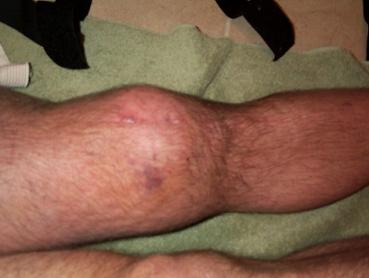
Many of these conditions and injuries may require surgical procedures to treat them, such as knee arthroscopy. In case of infection, sometimes the knee joint must be "opened" to debride infected and dead tissues that otherwise could not be accomplished with arthroscopic irrigation.

"We hope you enjoy your journey through Bone and Joint Pain.com"
