|
Psoriatic Arthritis DiagnosisPsoriatic arthritis diagnosis is difficult in that there is no single diagnostic test to confirm its presence . As usual, the most helpful pieces of the diagnostic puzzle are the patient’s own history, including family history, and physical exam. It is important to recall when the first skin lesions appeared, how the rash progressed, how it has responded to treatment. The appearance of nail pitting, ridges, or discoloration should be noted. The onset, duration, and pattern of joint pain and swelling, including swelling and pain surrounding the joints (from inflammation of the tendons and ligaments), and morning stiffness is important to recall.
The physical examination should include an inspection of the entire skin and all the joints, as well as a careful evaluation of gait. Be prepared for this when dressing for your doctor appointments. In particular it is important to inspect “hidden” places for psoriatic skin lesions, including the scalp, umbilicus (belly button), intergluteal (“crack” of the butt) cleft and perineum (under the underwear). X-rays are usually taken. They can often be helpful in the diagnosis.
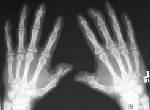
The “pencil in cup” destruction of the most distal joints
of the thumbs and long fingers is characteristic of psoriatic arthritis.
If there is a swollen joint at the time of an office visit, aspiration of the joint fluid (using a needle, done under sterile conditions, known as “arthrocentesis”) can yield useful information. Specifically studying the joint fluid can rule out gouty arthritis, a disease that mimics psoriatic arthritis. Blood tests can measure the general level of inflammation (ESR, or erythrocyte sedimentation rate and CRP). A rheumatoid factor (RF) is most often negative in PsA. There are some antibody blood studies that can be helpful and some genetic marker studies that are also done on blood.
Return to Psoriatic Arthritis
|


"We hope you enjoy your journey through Bone and Joint Pain.com"