Home
About Us
Contact Us
Find a Doctor
Arthritis Osteoarthritis
Arthritis Types
Rheumatoid Arthritis
Psoriasis
Fractures Fractures
Fracture Types
Adult Fractures
Kids' Fractures
Salter-Harris Fracture
Salter Type I Fx
Salter Type II Fx
Salter Type III Fx
Salter Type IV Fx
Hand & Wrist Wrist Fractures
Scaphoid Fractures
Scaphoid Fx Diag.
Scaphoid Fx. Treat.
Knee Knee Joint Pain
Knee Sprain
Knee Cartilage Tears
Knee Arthroscopy
Knee ACL Surgery
Foot & Ankle Ankle Pain
AnkleFracture
Treating Ankle Sprains
Ankle Braces
Heel Pain
Heel Pain Treatment
Hip Hip Fracture
Hip Pain
Back & Neck Low Back Pain
Spinal Stenosis
Shoulder Shoulder Pain
Shoulder Anatomy
Shldr Impingement
Rotator Cuff Tear
Cuff Tear Symptoms
Shldr Arthroscopy
Shoulder labral tear
Joint Replacement Joint Replacement
Shoulder Replacement
Anesthesia Anesthesia Types
Epidural Anesthesia
Fem. Nerve Block
Interscalene Block
Suprascapular Block
Medications & Treatments Joint Pain Remedies
NSAIDs
Alternative Pain Rx
Pt. Advocacy Patient Advocate
Web Friends

Rheumatoid Arthritis Defined


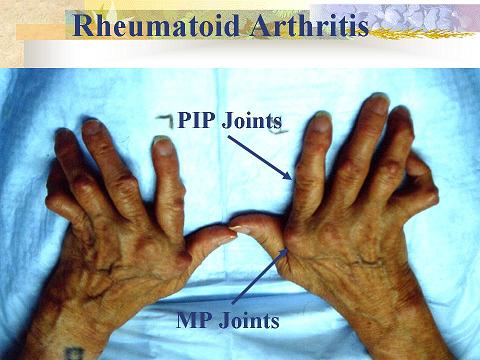
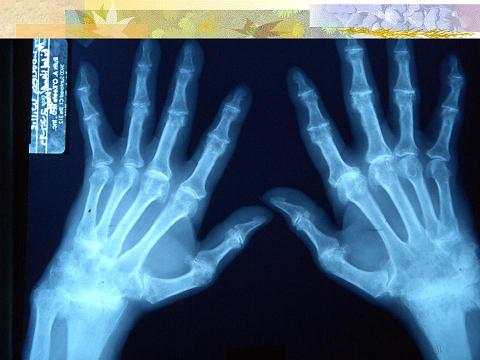
What is Rheumatoid Arthritis (RA)? Well, rheumatoid arthritis defined in understanadable terms, is a destructive, inflammatory disease that attacks the synovium, or the lining of joints.

Rheumatoid arthritis is felt to be an auto-immune disease, meaning our own immune system is the culprit. Basically the cause of RA is unknown, but it is a global phenomenon, affecting all races, all over the world.


Women are three times more commonly affected than men. Inheritance seems to play a role. Smoking is felt to increase the risk of developing RA. The distribution of RA is estimated to affect 1% of the world population, making an estimated 3 million victims in the USA alone. The disease becomes more prevalent with age. It is estimated that more than 5% of women over the age of 55 suffer from rheumatoid arthritis.


The course of rheumatoid arthritis is difficult to predict. It often appears first between ages 30 to 60. This disease is known for periods of remission (relief) and exacerbation (active disease), but generally RA is a progressive, destructive disease affecting functional ability and quality of life.


Typically rheumatoid arthritis has an insidious onset, which means it can develop gradually, to the point where it is well established before being really noticed. It often affects the small joints of the hands, wrists, and feet first, and in a “symmetrical” (same joints on the right and left) pattern. Rheumatoid arthritis can affect every minor and major joint in the body.

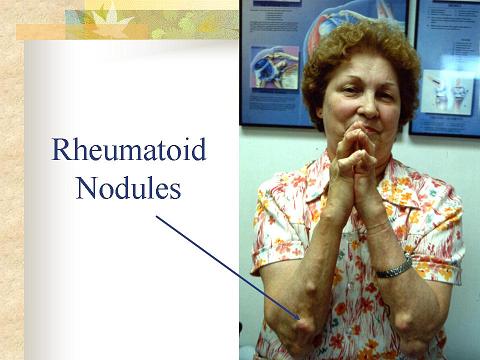
This is a systemic disease that can be accompanied by fatigue, loss of appetite, low-grade fever, and depression. Rheumatoid arthritis can affect all organs, including the heart, lungs, liver, blood (anemia, or low red blood cell count), and skin with “rheumatoid nodules” appearing beneath the skin, particularly of the forearms.


To learn more about the common SIGNS/SYMPTOMS of rheumatoid arthritis, click here .

To learn about TREATMENT OPTIONS click here .


Leave; Rheumatoid Arthritis Defined, return to Home Page

Leave: Rheumatoid Arthritis Defined, return to Arthritis Types


Ken Chisholm, Founder/Publisher

"We hope you enjoy your journey through Bone and Joint Pain.com"


Visit OTCOnly.com!


Medical Supplies